



















INTERVIEW. The exercise has become urgent in the face of population growth and rapid urbanization, which are putting pressure on food distribution systems on the continent. Interview by Malick Diawara
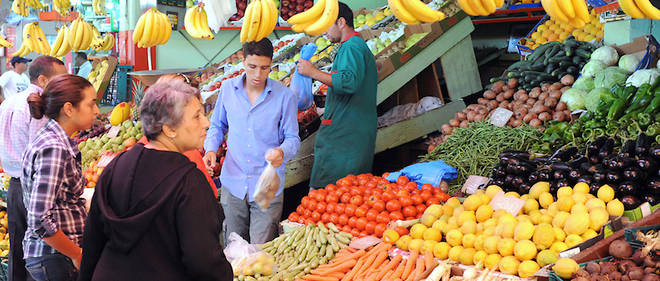
While Africa is recovering from the Covid-19 health crisis, it is also facing a food crisis, and the question of its distribution systems is addressed in a book that the French Development Agency (AFD) and the World Bank Group have just published in the Africa in Development series. Its title is « Agri-food systems in Africa » with the subtitle « Rethinking the role of markets ». The theme is important because, as incredible as it may seem, a third of food production is lost due to « the inefficiency of market intermediaries », explains the book, while « African cities are increasingly facing the challenges of undernutrition and malnutrition ». This means that the chain from agricultural production to the distribution of products through agri-food processing deserves a closer look. Based on the cases of three cities, Rabat, Niamey and Abidjan, the authors, Gaëlle Balineau, Arthur Bauer, Martin Kessler and Nicole Madariaga, have highlighted the major shortcomings of food distribution systems.
On all the issues surrounding food markets, Thomas Melonio, economist, Director of Research and Innovation at the French Development Agency, answered questions from Le Point Afrique.
Le Point Afrique: The Covid-19 crisis has laid bare the weaknesses of African agrifood systems. What are the most important ones you have identified?
Thomas Melonio: Fortunately, African agrifood systems do not have only weaknesses! The report that AFD and the World Bank have just published (under the direction of Gaëlle Balineau, Arthur Bauer, Martin Kessler and Nicole Madariaga) reminds us that African agriculture feeds a large part of the continent’s population. In West Africa, for example, imports represent only 8% of total food expenditures. The Covid-19 crisis has, however, highlighted weaknesses. Rice and wheat imports, which cover a large part of the continent from north to south, become a weakness when their price becomes volatile. For example, the price of rice on international markets rose by 30% in April, then again in early June, before falling back. For consumers, this creates vulnerability to world prices, and everyone remembers the severity of the 2007-2008 crisis and the « food riots.
Intra-African trade also remains insufficient. This creates a risk that some countries will have a production surplus and others a deficit. At present, East Africa is very much affected by the locust invasion; it will need the products of its neighbors!
Finally, we still see too much food waste, especially for perishable goods. When cold chains do not work from the producer to the consumer, the risks of waste are high.
The food security of a country or a continent depends first of all on its production. Where does Africa stand today on this point and what should be done to reach its full capacity of self-sufficiency?
The food economy is already a huge source of employment, with nearly two-thirds of total employment in West Africa, for example. Apart from areas in security crisis or affected by adverse events (drought, locusts), there is no massive underproduction. But we need to go further in order to localize production and especially processing activities even more on the continent. We also note that agricultural productivity is already affected by environmental degradation. Soil erosion and salinization of water tables, when they are poorly exploited or overexploited, are two areas where governments must accelerate their efforts to avoid impoverishment of the African countryside. Better intra-African connectivity would also allow a better distribution of annual production and avoid shortages. I am confident, however, that the continent will be able to adapt: with the Covid-19 crisis, we have seen producers, of cocoa for example, urgently plant rice to meet growing needs. We must not be defeatist!

Producing is not enough to satisfy the needs of the population. Infrastructure is needed to transport products to market. Isn’t this link in the chain underestimated in African countries? How could it be better invested to play its role fully?
There has undoubtedly been a focus on agricultural production, rather than on supply and distribution. We need to work on the entire chain, from « farm to fork », to avoid inconsistencies. We are trying to promote this integrated approach, even if the funding requests we receive are still very focused, either on production or on distribution. We hope that this will change in the coming years.
The organization of food markets is not only an economic matter, it also has to do with the sociology that surrounds them. What are the main features of African food markets?
Each country has its own specificities. In the study we are publishing, we note these differences in consumption patterns. In Niamey, shoppers are willing to cross the city to find the products they are looking for, at the best price. In Abidjan, purchases are made closer to home, as travel within the city is difficult. In Rabat, attention to product quality is increasing. Distribution methods also vary from country to country: some cities prefer large wholesale markets, as in Niamey, but others opt for neighborhood markets. Food channels therefore adapt to the sociological and physical realities of cities.
In most countries, however, we see major areas for improvement in limiting food losses. For fruits and vegetables, losses are estimated at between 35 and 45%, mainly during production (10%), processing (25%) and distribution (10%). Consumers, on the other hand, waste little. These losses contribute to the still too high price level, which is socially damaging. Reducing losses along the chain would help to feed the population better.
What initiatives do you think could help reconcile formal and informal distribution channels on the continent?
Reconciliation is a struggle! The rapid development of supermarkets in Africa raises new questions. In Kenya, we noted that during the lockdown, the middle classes were able to buy from supermarkets, which often remained open. But in the precarious neighborhoods, where residents go to shop in markets that have been closed for several weeks, the situation quickly became tense. In the long run, this « new » supermarket sector will have to be regulated in order to support local production and ensure equity with other distribution methods. Each distribution mode will have to take into account local production channels to encourage their development, even if interdependencies between countries are inevitable.
New informal channels were also created after the crisis broke and the covered markets closed: traders opened stalls in front of their homes or organized delivery services. This helped reduce the impact of the crisis and demonstrates the capacity of the continent’s actors to react quickly.
The Covid-19 crisis revealed the importance of the hygiene-equipment-technology trilogy. How can African markets be updated on these three points?
I am encouraged that, in recent times, information on hygiene measures and barrier gestures has circulated rapidly in Africa. There is fake news on the continent as elsewhere, but overall these measures seem to be known in the main cities. This makes it possible to limit other restrictive measures and, for example, to reopen food markets even if the epidemic has not disappeared.
More structurally, good information for producers and consumers is essential. Providing producers with access to reliable weather data is essential for them to decide when to plant and when to harvest. Significant production gains are possible. We are conducting pilot projects in this direction, for example to innovate with the sugar industry in Côte d’Ivoire. Buyers also need information on price, which is increasingly the case, but also on the quality of available products. There is much to be done to « standardize » this quality, which is still uneven.
The Covid-19 crisis revealed the importance of the hygiene-equipment-technology trilogy. How can African markets be updated on these three points?
I am encouraged that, in recent times, information on hygiene and barrier measures has circulated rapidly in Africa. There is fake news on the continent as elsewhere, but overall these measures seem to be known in the main cities. This makes it possible to limit other restrictive measures and, for example, to reopen food markets even if the epidemic has not disappeared.
More structurally, good information for producers and consumers is essential. Providing producers with access to reliable weather data is essential for them to decide when to plant and when to harvest. Significant production gains are possible. We are conducting pilot projects in this direction, for example to innovate with the sugar industry in Côte d’Ivoire. Buyers also need information on price, which is increasingly the case, but also on the quality of available products. There is much to be done to « standardize » this quality, which is still uneven.
How can Africa turn these markets into spaces for value creation in line with sustainable development objectives?
Systemic approaches from producer to consumer have too often been neglected. This leads to losses that are still too great throughout the food chain, and therefore to shortages or prices that are too high. However, better organization of this chain and the use of new technologies allow us to hope that the progress already observed will continue. The study we are publishing details these avenues of work.