













Underdeveloped countries suffer from common ills that undermine their efforts to improve their economic and social situations. To this end, the African Union (AU) initiated the African Continental Free Trade Area (AfCFTA) project which came into force on 30 May 2019, without Benin’s membership. In an interview, we asked an expert to shed more light on this project and on a number of problems facing not only African leaders but also the populations that make up these nations.
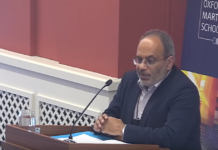
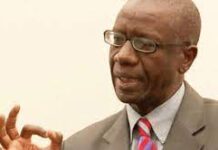
Professor of geography at the National University of Benin (UNB), now the University of Abomey-Calavi (UAC), and former Dean of the Faculty at this university from 1978 to 1981, John Igué was Minister of Industry and Small and Medium Enterprises between 1998 and 2001. Passionate about economic geography, but also about the history of the Yoruba civilisation, the informal economy and Africa’s place in globalisation, he was behind the creation of the Laboratoire d’analyse régionale et d’expertise sociale (Lares), an independent research centre based in Cotonou.
He is also the author of several publications, including Growth and development in West Africa; Youth in West Africa: a potential to build; Benin and the globalization of the economy: the limits of market fundamentalism; The territory and the State in Africa: the spatial dimensions of development; Borders, spaces of shared development…After dissecting the subject relating to the Continental Free Trade Area, John Ogunsola Igué, spoke on the CFA franc, corruption and the challenges facing Beninese and African youth.
Benin Economist: What can the Continental Free Trade Area bring to Benin?
Inter-African trade is very low, except for a few countries. We trade 80% with the outside world. This means that we only work for the outside world. Because we participate in strengthening their production against ours. Because we do not consume what we produce here. So it means that all our wealth is spent outside. That’s why we have always been in a situation of underdevelopment since our independence. It is to change this that African leaders wanted to create a free trade area. To fight against the obstacles to inter-African trade. There are too many protectionist measures between states. This prevents Benin from trading with Nigeria, Togo and other countries in the region. Even though at the level of ECOWAS and UEMOA we have taken measures that allow trade to take place. But the obstacles that African leaders put at their borders to protect their economy prevent Africans from trading with each other. The objective of the free trade area is to remove these barriers to allow those who have goods to sell on the continent to sell them easily so that we can improve the volume of intra-African trade.
If we trade with each other, our financial resources will stay in place. It will increase our savings. But if we spend our savings to buy outside, it means we are impoverishing ourselves for others. You see, China’s reserves are colossal today because China is selling to everybody. Everybody buys Chinese. So that makes China have a lot of money. The advantage of the free trade zone is that Benin can control its own savings if it manages to place products on the African market because one thing is to create the free trade zone and another is to be able to benefit from it.
What are the challenges facing the countries that have integrated the free trade area?
So the problem facing African countries in relation to the free trade area is not just to create the free trade area, it is to see if the economies are complementary, if we have things to sell to each other. If all African countries produce cotton, who will buy cotton? If we all produce cassava, who will buy it from us? So before creating the free trade area, we have to see if the economies are complementary. If this is not the case, we can create the free trade zone but it will not work.
While creating the free trade area, the countries must specialise. They must not copy each other. That they do not produce the same things. But our economy, on the whole continent, is the economy imposed since colonisation, for the benefit of colonisation. We have never managed to change the structure of our economy. That is also why we cannot sell to each other.
What influence will the free trade area have on the labour market?
If we can sell to each other and our savings stay here, we will create more jobs with these savings. If you have money, you will diversify your activities. If you don’t have money, you can’t do it. So, as I told you earlier, if we manage to control our savings, we will get richer on the spot and with this enrichment we will diversify our economy and create jobs for young people.
Is the launch of the African Union Free Trade Area one of the first steps towards the adoption of a single currency in Africa?
Africa has never talked about a single currency. It is ECOWAS alone that talks about a single currency. We cannot have a single currency for all 55 states. Why not? We have two opposing zones within the 55 states that we form. There is the white part and the black part. The whole Maghreb, including Egypt and Libya, do not look south. They look north. Because they are white. So they will never accept a single currency with the blacks. That’s why we talk about sub-Saharan Africa today. It is black and has a backward development compared to white Africa. Simply because we speak the language of others in sub-Saharan Africa while others speak their own language. And this has facilitated their education. They speak Arabic and we speak the language of others. This is a huge handicap to the education of our people. But we don’t want to change. The pretext is that there are too many ethnic groups and we don’t know what language to speak. This is a mistake. So, in relation to the constraints between black and white Africa, it is impossible to have a common currency today. It is a dream.
Even at the ECOWAS level, it will not happen soon because of the lack of a strong institution capable of managing this single currency.
What do you think about abandoning the CFA franc and adopting a single currency at the ECOWAS level?
It is a very good idea. But it will not materialise for one simple reason: you cannot have a currency without a strong political authority. ECOWAS, which talks about this, is not a strong authority. It depends on the states, because of its functioning. So it is not a strong authority to manage a currency. It is not worth embarking on dreams that cannot be realised. This is the difficulty of making money since then. We thought that it was France that was opposed to the CFA franc. That’s true, but it’s not the biggest obstacle. It is the lack of a strong institution to manage a currency that remains the main obstacle today.
The euro, the European currency, is the German currency. It is Germany that guarantees the functioning of the euro. The others are satellites of Germany in relation to the euro. To show you, recently, the other states, starting with France, have taken stock of what they have gained since the creation of the euro up to now. Taken individually, the French have lost 50,000 euros on their savings, the Germans have gained 30,000 euros. This is proof that it is a German currency that is being offered to other states. And it is Germany that guarantees its functioning through its economic power. It is not the European Union.
Are the CFA franc and the secret agreements linked to it the first evil that confines Africa in the trap of underdevelopment? If not, what is it?
For us, who use the CFA franc, from independence until now, we have not progressed. On the other hand, others who use their own currencies are making progress. Why are they doing so? Because in the CFA zone, the transfer without counterpart that the currency allows is a big handicap to our own savings. All the rich people in the eight countries that use the CFA franc, we don’t know where they deposit their wealth. So the effort we make goes abroad. On the other hand, in the non-convertible currency zones, their central banks have an exchange control policy. And in relation to this policy, it is impossible to transfer money abroad without the permission of the central bank. This control allows the central bank to regulate the transfer of foreign currency and to impose a quota on these rich people to invest in the country. As a result, this exchange control promotes national wealth. This is why Nigeria has people like Dangote and Côte d’Ivoire does not. Even less so Senegal. This transfer without counterpart plays against the progression of the GDP in the CFA zone. If we try to diversify the economy, the drain on wealth is too great. This is the first drawback of the CFA franc.
The second disadvantage is that our economy is not strong in relation to a strong currency. As there is no flexibility in the exchange rate of the CFA franc, we are penalised in relation to the fluctuation of the international exchange market. This handicaps us enormously.
And then the third disadvantage is that you can’t make profits on a currency that you don’t control. These are the three handicaps of the CFA franc today.
Benin has an encouraging economic growth record, but the population is not feeling the effects. How do you interpret this situation?
It’s pure and simple manipulation. Because it is the government that dictates the growth rate and it is the government that gives the figure it wants. If growth were real, people would not be poor. If people are poor today, it means that in terms of real growth, there is nothing. It’s just manipulating the numbers. If people are poor then where does growth come from? Growth can only come from people’s work. And they are poor. What do they finance the work with?
Some economists argue that stable growth is needed for several consecutive years before the people of a country can feel the effects. What do you think?
It’s true. It means that if you have stable growth, the benefits of that growth will allow people to have stable incomes. And when people have stable incomes, they are happier and can work more. So this theory is not wrong. But on condition that the figures used are based on reality. This is not the case for most African countries. These are conventional rates. They do not necessarily reflect reality.
What actions should be taken to lead Benin towards sustainable development?
This is what we have been talking about since independence. Firstly, there should be no more theft in the public sector. The amount of money stolen from the state coffers is enormous. And we don’t know what the thieves do with the stolen money. Even if they do something with it, they invest in non-productive sectors such as buildings. When you have money and you build a 10, 20-storey tower, you have killed the money. That money is dead in the bricks. But those who are robbing the state today, that’s what they are doing with it. If they don’t build with it, they waste it on women.
It is this theft that has kept us from moving forward since independence. The theft is too great. And the fruit of this theft is only used to improve the urban fabric, not for development.
Between the CFA franc and corruption, what is the biggest handicap to Africa’s development?
It is corruption. Because corruption is widespread. And as I said, most of the money from corruption is wasted. Because it is spent in non-productive sectors. We’re going to walk around with it. We increase the number of women and villas. All this is not production. This is why corruption is the greatest evil of African societies. As it is a widespread phenomenon, we are in this. To show that it is not an African phenomenon, tax havens are created to manage dirty money. When we talk about dirty money, we mean stolen money. So corruption is the greatest evil. It is not the CFA franc.
The CFA franc is involved in this because it facilitates it. Because if you steal, you can transfer it abroad without any compensation. This is where the CFA franc has links with corruption. But corruption is the greatest danger to African countries. With catastrophic consequences.
Do you think that Africa will ever be able to overcome corruption?
Corruption is linked to an important phenomenon: the awareness of citizens. That’s why we demanded democracy. What we hoped for from democracy is not necessarily the alternation of power: it is the education of citizens. It is the rule of law. That everyone has their rights. So when there is no democracy, anything goes. That’s why the only way to deal with corruption is for democracy to become effective. And that people know their rights. It is democracy that makes this possible.
The advantage of alternation is that it makes the groups within the state system change. And there is a rotation of benefits from the state. Benefits are no longer monopolised by one clan. This rotation makes it possible to establish a minimum of justice at the level of the nation, which we call equity. But when it is the same group that holds power all the time, there is no justice or equity. This is the advantage of alternation. That’s how we can solve all these problems. That is why the countries that function best today are those where citizens are very conscious of their interests. And it is the role of political parties to train citizens. This is where democracy becomes necessary.
Do you have a particular concern to address?
The only concern I have to address is that of the youth. They need to change their behaviour on many points. Firstly, they are poorly trained. They are no longer interested in doing a good job. Even when we want to train them, they are not interested. Young people are in a hurry to get rich. This is the greatest evil of our societies today. So if I have an appeal to make, it is to the young. That they should no longer be the object of manipulation by all the forces at work in African societies. And these forces are many. Starting with evangelical movements, Muslim fundamentalism and sectarian fundamentalism.
Young people do not know where they are going. As a result, they can no longer spearhead qualitative and sustainable change. This is very dangerous. This is my only appeal. If young people do not fight to say that they are the spearheads of change in the future, nothing will happen in our countries. But young people today are in a hurry to get rich. They don’t ask themselves if they can get rich without working. As a result, it is young people who are used today to commit crimes in our societies. Young people are involved in all the dirty tricks in our societies. When we were young, we were not like that. We were driven by very high ideals. We were driven by very high ideals: work well done, probity, pride… But today, this is not the case for young people. African youth is in deep crisis. It is not their fault. But at a certain point they must realise that they have not been well trained. The proof is that when we were young, we had solid student movements that kept watch. But today there are no longer any representative mass organisations that cultivate values among students and young people. And they themselves do not want to revolt to defend their interests. They play into the hands of the easy way out. That’s my concern. Because the future of a country depends on its youth. And if they are not aware, if they are involved in bad actions, the future is dark. The issue of youth is worrying. Even if the state does nothing for them, they themselves should fight. This is the appeal I would like to make.
Source: ODD-AFRICA