
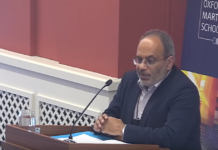





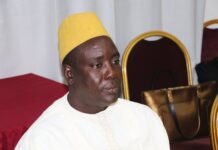







Ndongo Samba Sylla is one of the most prominent African intellectuals today. The Senegalese economist, 4 times world scrabble champion, has distinguished himself by his positions on the CFA franc, which are both humanist and radical.
Author with Fanny Pigeaud of the book L’arme invisible de la Françafrique, une histoire du franc CFA (2018), but also of La Démocratie contre la République (2015) and Le scandale commerce equitable (2013), the resident of the Rosa Luxemburg Foundation never shies away from debate. With a mentor like the Franco-Egyptian economist Samir Amin, and a left-wing background, he campaigns for a unitary or collegiate exit from the CFA. His reading of the African economic context, in the global dynamic, its historical and political perspectives, makes his expertise a highly prized subject internationally. His analyses are nourished by his African foundations and his openness. Discreet but determined, he supports the continent’s desire for sovereignty and an economy that is more concerned with life and human dignity. At a time when the continent is at the crossroads of several issues, with the risk for economists of being mobilised by the sole questions of the « symbol » concerning the question of money, he broadens the field in our exchange. It is a more global and ambitious vision that Ndongo Samba Sylla promotes on the issues of liberalism, industrialisation, predecessors, informality, money, Françafrique, and the existing literature on the subject…. He is not immune to contradiction and some of his visions are not unanimous. He did not want the principle of a portrait that we proposed to him, preferring to « talk about his ideas rather than about himself ». So here is our interview, conducted before the joint announcement by Emmanuel Macron and Alassane Ouattara of the exit from the CFA and the adoption of the ECO.
You wrote L’arme invisible de la Françafrique (The invisible weapon of Françafrique) with journalist Fanny Pigeaud, about the CFA, whose history you trace. You see the currency as the very symbol of the survival of colonial ties and one of the theses of your book is that the « supposed stability » guaranteed by the current currency, a counter-argument put forward by the supporters of its continuation in the same formula, has not allowed the development of the countries in the zone. In your opinion, what is the mechanism that causes the economic difficulties experienced by the countries of the CFA zone? In what proportions?
In our book, Fanny and I aimed to tell a story about the CFA franc that everyone can understand. Really everyone. This is the challenge we set ourselves: to deconstruct the CFA franc and, in particular, the idea that the currency is too technical a subject to be accessible to ordinary people. Politicizing the issue of the CFA franc therefore requires demystifying it and educating people. This is what we believe we have done, given the many positive feedbacks we have received so far and the fact that our book, already translated into Italian, will be published next year in English and Mandarin.
Fanny and I show that the CFA franc is a political and monetary device set up in 1945 by a ruined France in order to involve its African colonies in its economic reconstruction effort. At the time of independence, with the exception of Guinea, France succeeded in keeping all the territories of the former AOF and the former AEF under its control by means of ‘cooperation agreements’. These agreements, which concerned areas of sovereignty – currency, diplomacy, foreign trade, higher education, aviation, raw materials, etc. – These agreements, which concerned areas of sovereignty – currency, diplomacy, foreign trade, higher education, aviation, raw materials, etc. – amounted to France stripping the ‘independence’ it had conceded of its substance. Thus, for example, until the end of the 1960s, these countries could not import cars or refrigerators outside the franc zone without the approval of the French government! And, of course, the central banks at that time were based in Paris with French staff. The ‘Africanisation’ of central bank staff and the transfer of their headquarters to the continent took place from the mid-1970s onwards. But to this day it has left the CFA system intact in its foundations, mechanisms, management and objectives.
The franc zone, which today essentially consists of the two blocs that use the CFA franc, was conceived as an economic annex of France. It is supposed to facilitate the cheap supply of raw materials to France, the free transfer of economic surpluses to the metropole (the outside world) without exchange risks and with the assurance that these financial outflows will not be interrupted by a shortage of foreign currency.
The second reason is economic. In the franc zone, as Samir Amin and Joseph Tchundjang Pouemi have so well analysed, the currency is managed in the service of colonial extraversion. That is to say: no financing for domestic activities, credit is granted for export products desired by the metropolis and to create an outlet for metropolitan products, the exchange rate is maintained at an artificially high level, no strong trade links between countries sharing the CFA franc, local economic surpluses are transferred to the outside, etc. Thus, it can be said that the CFA franc has been and remains first and foremost an instrument to protect French interests.
Under these conditions, it is not surprising that the countries of the franc zone have mostly stagnated in the long term. Côte d’Ivoire, the largest country in the franc zone, had a real GDP per capita in 2016 that was 1/3 lower than its best level in 1978! Senegal in 2016 had the same real GDP per capita as in 1960. The same is true for the majority of franc zone countries, which also have the lowest performance in the world on health and education indicators.
At present, if WAMU countries are recording high growth rates, this is due more to a good international situation than to their intrinsic dynamism. It should also be noted that this growth, in many cases, makes up for the decades lost in the economy. It is associated with little decent job creation and massive income transfers in the form of repatriated profits and interest payments on debt.
Achieving a high rate of economic growth is not synonymous with development. Development requires control of the conditions for internal accumulation. If you don’t control your monetary and financial system, how can you expect to have a coherent development policy?
In your book, which seems to be a charge against Françafrique, chapter after chapter, there is a strong historical penetration; from the history of the currency to its technical implications, from its modes of operation to the recurrent intervention of Paris to maintain it. Hence the use of your title the invisible weapon. Isn’t this weapon ultimately very visible, given the real and not very confidential links in this relationship? What does France gain economically, beyond the question of influence, by keeping or imposing a currency? What contribution does it make to the French economy?
The best way to answer this question without getting into polemics is to quote an evaluation report on the franc zone produced by the French Economic and Social Council in 1970. This report listed five « undeniable » advantages of maintaining the CFA franc.
First, France can buy in its own currency and on credit all goods and services sold in the franc zone countries. This is an advantage that has been historically important and has allowed it to save its foreign exchange reserves.
The second advantage is that French companies and products benefit from important and stable outlets in the franc zone. But this has become less and less the case since the 2000s with the emergence of China as the main trading partner of most francophone countries.
The third advantage is that France enjoys a trade surplus with the franc zone countries, which also provide it with significant foreign exchange reserves that have sometimes been used to pay off the French debt.
The fourth advantage is that French companies are assured of being able to repatriate their income and capital freely and without exchange rate risk thanks to the free transfer policy and the fact that France decides on monetary and exchange rate policy in the franc zone.
Finally, thanks to the CFA franc, France has a system of political control which serves its economic interests and which has the merit of costing it nothing since its so-called convertibility ‘guarantee’ has rarely been effective. Apart from its economic functions, the CFA franc is therefore a sword of Damocles hanging over the heads of African heads of state, as Laurent Gbagbo learned to his cost in 2011.
In your book, you point out, very quickly, the issue of the lack of industries that can carry the economies of the zone. How do you explain this observation of an economy that has changed little? What is the responsibility of governments, economists and elites in charge of thinking and implementing plans?
African countries had made some progress in industrialisation between 1960 and 1980. This progress was wiped out with the implementation of structural adjustment plans in the early 1980s. As a result, most African countries are still exporters of primary products. What is peculiar about the countries using the CFA franc is that industrialisation is simply unattainable.
The maintenance of a fixed parity with the French currency (French franc and then the euro) has as its counterpart a low level of financing for the economies of the zone. Yet, without financing for SMEs, how would industrialisation be possible? There is no known experience of industrialisation without an active commitment from central banks to facilitate access to affordable interest rates for national « champions » and SMEs. Unlike central banks that are « agents of development », the BCEAO and BEAC are rather « agents of economic extraversion » of our countries. They have no development objectives: they are content to just maintain the parity of the CFA franc with the French currency. At present, this is reflected in the zero growth in the supply of bank loans in some CEMAC countries!
Moreover, when you do not control the evolution of the exchange rate of your currency, you cannot have a coherent medium-term industrialisation strategy. The work of the BCEAO itself shows that the CFA franc was a strong currency that handicapped exports between 1960 and 1994, when the CFA franc was devalued by 50% against the French franc to regain competitiveness. In 1999, the euro replaced the French franc. Between 2002 and 2008, because of its peg to the euro, the value of the CFA franc gradually increased by more than 90% against the dollar, the currency in which we receive our export earnings. As a result, African countries’ exports are handicapped. Many agricultural sectors made losses during this period because their export earnings in dollars lost value when converted into CFA francs.
When the Europeans themselves, and the French government at their head, admit that the euro has killed the industries of the weakest countries, why should we expect the pegging of the CFA to the euro to have different consequences for our countries?
So, no financing on the one hand; no possibility of exporting competitive products on the other because of the high cost of the CFA franc. Add to this the policies of trade liberalisation (lowering of tariff and non-tariff barriers on imports), and you get the result we see in Senegal: everything is imported and expensive and nothing is produced locally that is sophisticated enough to be exported abroad.
Beyond these observations, my conviction is that a real industrialisation policy must be the subject of a concerted effort at continental level or at least at regional level. It is an illusion to believe that Senegal, Côte d’Ivoire, etc. can each industrialise separately. It is time to reread Cheikh Anta Diop and Kwame Nkrumah.
Your book comes in a field where literature is already abundant. Your themes and developments enrich an already existing base, whether it be the critique of Françafrique or even currency. What do you think of the work of Samir Amin of CODESRIA and the need for Africa to invent a means of endogenous development that emancipates itself from liberalism? How, economically, could we achieve purely African recipes in a globalised world?
Samir Amin is a GIANT. If the Nobel Prize in Economics was open to heterodox/radical economists, he would have won it. In my opinion, one cannot convincingly talk about the reasons for Africa’s underdevelopment (a different concept from « poverty ») and strategies to get out of it if one does not go through the « Samir Amin » box. Not that what he has written is gospel, but that only a fruitful confrontation with his thinking and that of other illustrious economists from the Global South like him can enable us to get out of the rut.
Unfortunately, students in African economics faculties have been fed the intellectual poison of orthodox economics for nearly four decades. They and their teachers often ignore the work of thinkers like Samir Amin. It is therefore not surprising that our academics have mostly allied themselves with the International Financial Institutions, either objectively through research contracts or subjectively – through the uncritical adoption of their approaches. This has generated a kind of Groupthink that permanently justifies economic policies that are to the detriment of the overwhelming majority of our populations.
Last November in Tunis, Samir Amin’s name came up repeatedly at an international conference on the theme of Africa’s economic and monetary sovereignty, which brought together an array of economists from all over the world. Echoing Amin, the vast majority of participants agreed on the need for Africa’s ‘disconnection’ from the globalised capitalist system. Disconnection, a theme dear to Amin, does not mean autarky/self-reliance but a reversal of global relations: it is up to the global system to adapt to the needs and priorities of developing countries and not the other way round.
Samir Amin can also be considered the intellectual father of the movements against the CFA franc. He was one of the very first African intellectuals to raise the economic debate on the CFA franc through his academic publications and activism. In the late 1960s and early 1970s, he worked alongside Niger’s President Hamani Diori for a collective exit from the CFA franc by the WAMU countries and for extensive monetary cooperation between the ECOWAS countries. His exit plan, which is still relevant today, was accepted by all WAMU countries, except Senegal, Côte d’Ivoire and France of course. This is a little-known story that I tell in a text that will soon be published in Europe in a collective book that pays tribute to it.
You outline ways out of the CFA by means of a collegial or unitary approach. Can the current political infrastructures of the states – some of which are bankrupt – support a solitary adventure? To what extent could the state of Guinea be a deterrent or an incentive?
To justify the status quo, advocates of monetary servitude often cite the cases of Sekou Touré’s Guinea and Modibo Keita’s Mali. Sekou Touré’s Guinea was the victim of political and economic sabotage by the French secret service, which flooded the country with counterfeit banknotes in retaliation for its withdrawal from the franc zone. This sabotage operation was conducted from Paris, Dakar, Rufisque and Abidjan. The Senegalese and Ivorian authorities were therefore complicit. In the case of Mali, a landlocked country, its WAMU neighbours set up protectionist barriers to punish Modibo Keita for having chosen monetary independence. How could Mali have succeeded in this environment of isolation and repression?
Guinea and Mali do not show that Africans are incapable of managing a national currency, but rather that Senegal and Côte d’Ivoire have always been allied with France and have worked hard to nip in the bud any desire for monetary independence in the former AOF.
But why mention the cases of Guinea and Mali? Why not mention the cases of Vietnam, Morocco, Tunisia and Algeria, former territories of the franc zone, which chose to mint their own currency when they gained independence? Why not mention the case of Rwanda, which many pan-Africanists consider to be the image of an Africa that assumes its independence?
In today’s world, apart from the countries that use the CFA franc, those in the euro zone and the member countries of the Eastern Caribbean Monetary Union, all the other countries in the world have practically their own national currency. The norm is therefore one state, one currency. The exception is single currencies, which are colonial creatures par excellence. They reached their peak in the colonial period. Why this stubbornness for single currencies? Has any formally sovereign country ever emerged from underdevelopment under a single currency? The answer is no. Why would anyone think that the countries of French-speaking Africa would be incapable of minting money like most of their counterparts on the continent? If Gambia and Mauritius can do it, why can’t Senegal and Côte d’Ivoire?
It is sad to note that French colonial propaganda continues to wreak havoc on Francophone intellectuals of all stripes, whether progressive or not. Why is this so? Because they have been successfully inculcated with the idea that French-speaking Africans are incapable of having a well-managed national currency. As a result, most of those who want to get rid of the CFA franc exclude from the outset any idea of a national currency. So, for them, a single currency is necessary. The problem is that a single currency cannot work without the precondition of political federalism. Given that French-speaking African countries do not trust each other and that their ‘solidarity’ only exists when it is organised by the former metropolis, this implies that they will always remain in a colonial in-between: neither national currency nor a single sovereign federal currency.
In our book, we show that the ECO is a crude copy of the Euro, an inconclusive monetary experiment that should never be emulated. Following leading African economists such as Samir Amin, Mamadou Diarra and Joseph Tchundjang Pouemi, we propose a system of « national solidarity currencies », i.e. a system that achieves the expected benefits of a single currency while minimising its notorious drawbacks.
In concrete terms, each country in the franc zone should have its own national currency, managed by its central bank. Solidarity between these national currencies could be organised at three levels. Firstly, they would be linked by a common unit of account which would be used to settle trade between them. Secondly, foreign exchange reserves would be partly managed in solidarity with a view to the currencies supporting each other. Finally, common policies could be implemented to achieve self-sufficiency in food and energy, and thus limit imports in these two sectors. Unlike the ECO project, this system has the advantage of allowing solidarity between African countries and macroeconomic flexibility at the national level.
In the particular case of Senegal, the discovery of oil and gas changes the situation. On the one hand, the expected revenues allow our country to create a national currency. On the other hand, we must realise that the triptych of oil + trade liberalisation + CFA franc is a deadly cocktail. If Senegal wants to develop and profit from its oil and gas, it must get out of the CFA franc and not give in to the siren calls of trade liberalisation.
The debate on the CFA is old and historic. Beyond the symbolism, there are many technical implications. Like you, Kako Nubukpo, Martial Ze Belinga, Demba Moussa Dembélé and Bruno Tinel, in the book Sortir l’Afrique de la servitude monétaire : A qui profite le franc CFA ? Public opinion is in favour of this exit. Only the institutions in charge, also made up of economists, seem to be deaf to your criticisms and proposals. How do you explain this? Is it purely and simply a lack of awareness, or a comfort on the part of the leaders?
This book, published in 2016, made a decisive contribution to re-launching the debate on the CFA franc. I had the privilege of contributing to it. It is the result of a beautiful collaboration between African and European researchers. It is therefore a fine symbol of the internationalism of peoples – of solidarity between peoples – which we must continue to encourage.
In my view, those who defend the CFA franc may be motivated by (i) personal interests (in the case of those in positions of power or with connections to actors in the CFA system) or by (ii) adherence to the orthodox economic view of the currency (which assumes that the currency has a neutral economic impact). Sometimes it may be (iii) sheer ignorance. This is the case of those who think that the CFA franc is not a major problem and that it would even be a lesser evil given the ‘bad governance’ of African leaders. This is a poor reasoning because there is no more proven case of « bad governance » than the CFA franc. Sometimes we are dealing with cultural alienation (iv). This is the case, for example, of intellectuals who take up the colonialist argument by arguing that African countries are not capable of managing a national currency.
Lionel Zinsou, the unsuccessful presidential candidate in Benin and currently head of the Terra Nova Foundation – a laboratory of progressive ideas – points out that the lack of competitiveness attributed to the CFA is due to the deficiencies of the training systems. He thus minimises the responsibility of the CFA. What do you think of his vision?
Lionel Zinsou is a loyal servant of French interests. He is in his role as ‘guardian of the temple’, that of justifying the status quo.
Looking at the nature of the debate on the CFA, one has the impression that he is captive to the sole question of the « symbol », the link with the former colonial power. Why do you think it is urgent to have a sovereign currency in the current configuration of African economies?
The symbol is important. It is shocking and unacceptable that six decades after formal independence a colonial currency still circulates in fourteen African countries and the Comoros.
Whenever I go outside the francophone world and have the opportunity to talk about the CFA franc, people – academic economists – are generally outraged. They say: where are your intellectuals, your economists, your business leaders? What are your political leaders doing? What are they waiting for to get rid of this colonial currency? My sober answer is every time: our leaders and economists think that this currency ensures us « economic stability ». I don’t need to tell you how intellectually ‘special’ the Francophone world is…
Pan-Africanist activists are therefore right to denounce the political illegitimacy of the CFA franc. They should be congratulated and encouraged. They have had the merit of having brought the issue of the CFA franc to the level of daily public debate. It is also revealing that the most committed ‘activists’ are often better informed than the ‘currency experts’ who try to demobilise them with generally irrelevant criticism.
The abolition of the CFA franc is a necessary but not sufficient condition to see the emergence of sovereign currencies in former French colonies. Having one’s own national currency and central bank is a condition for national independence. This is monetary sovereignty in its formal aspect. But it is not enough. This prerequisite must be complemented by policies to mobilise domestic resources. This presupposes a government that controls the banking and financial system – and therefore the allocation of domestic credit – and that has real sovereignty over its economic resources.
A sovereign currency is one that guarantees the financial independence of the government. The few countries that have a sovereign currency are the US, Japan, China, the UK, Canada, Switzerland, Australia, etc. Their governments never go into debt. Their governments never go into debt in foreign currency. And since they can never be insolvent in their own currency, they can in principle finance, with the terms they themselves have determined, all the projects useful for the health of their economies. There can never be a shortage of money (i.e. electronic entries on bank balance sheets) for the realisation of projects of public interest for a country that has a sovereign currency. The main constraint for a country with a sovereign currency is real resources: is there land, labour, mineral resources, etc.? In other words, financing is never a problem for a country with a sovereign currency.
In Africa, sovereign currencies would obviate the need to sell off our abundant physical and human resources to attract ‘external finance’. Instead of seeking « external financing », we should rather fight to conquer this monetary sovereignty that will allow us to finance with African funds all the projects desirable for the continent and create millions of decent jobs.
Unfortunately, the debate on the CFA franc has not yet reached this level because the guardians of the temple do not know what a sovereign currency is and what it allows. They have a false understanding of the role of money and its nature in a modern economy. They will recite the following myths: money was born out of the disadvantages of barter; money is a commodity; money has a neutral impact on economic activity; the supply of loanable funds that economic agents can access is always limited by definition; banks act as intermediaries between savers and investors; savings finance investment; poor countries lack internal finance because they are poor and do not have enough savings; etc.
As soon as you talk to them about monetary sovereignty, they will immediately cite the hyperinflation in Zimbabwe as if this example were representative.
One thing is clear for the African continent, however: without progress in terms of monetary sovereignty, political independence and economic development will remain illusory.
The CFA seems to overshadow all other segments and topics of the economic debate, when one looks at the favourite topics of Franc zone economists. A collective of which you are close to the leader, Guy Marius Sagna, « France Dégage », calls for a break with France. Do you share his opinion?
Guy Marius is a friend, brother and comrade in struggle. He personifies this new generation of Africans without any complexes who are fighting for the continent to have full and complete sovereignty.
France Dégage! is a slogan that has a precise origin and an unequivocal meaning. Guy Marius and his comrades initially used it to say that France must leave the CFA system. I myself had spoken, long before them, of Frexit. So it’s a specific demand linked to the CFA system and not a call to cut all relations with France. Subsequently, this slogan was mobilised in the fight against the establishment of French supermarkets in Senegal and against the French military presence in Africa, particularly in the Sahel.
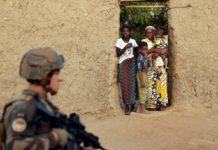
For my part, I believe that the African continent cannot call itself free as long as the CFA system remains in place and foreign military bases continue to swarm there.
Foreign influence in Africa is not, or no longer, solely the work of France. Through foundations, NGOs, a diplomacy of influence accompanies many civil and youth movements. Is this an « invisible weapon » of conquest in your opinion?
For a long time, those in favour of capitalism were told to adapt it to the logic and specificities of African economies. With the arrival of Orange and Free in Senegal, which are in line with the specific logic of the Senegalese economy, such as its informal network of retailers, and the investment in language to better reach the population, how do you judge these changes in capitalism with a view to conquering local markets? Is it to be encouraged or opposed, and how?
What does money mean in practical terms for a trader in the informal sector?
Modern economies are ‘production money economies’. This means that production cannot start (and cannot grow sustainably) if the entrepreneur does not have access to bank credit. It also means that the producer sells goods and services to obtain money. Those in the most vulnerable segments of the informal sector are often those who do not have access to affordable bank credit. In a way, the size of the informal sector in our countries is itself an indication that the monetary and financial system is not working for people.
Although large traders active in import-export are often included in the « informal sector », this does not seem justified to me.
Otherwise, in general, the strong CFA franc suits importers and penalises exporters, whether they are in the informal sector or not.
You are an economist and your references are often the same as those of economists trained in Western schools. Do you consciously or unconsciously start out with the matrix of an economic epistemology that reads the African fact with other glasses?
How do you explain the fact that African economists seem to have little say in proposing concrete solutions to support the continent’s economy?
One of the problems of our countries is often the inability to raise funds through endogenous levers, low taxation: this makes them captive to external flows. FDI, ODA, remittances! How can we envisage a public policy fed by national fundraising engineering? What fiscal policies could be tested?
Criticism of liberalism is very old, the Mauss review among others – Bourdieu and many other authors can be cited – is devoted to deconstructing the figure of homo economicus. In the African field recently, in Afrotopia in particular, Felwine Sarr criticises the injunction to growth, and Kako Nubukpo in L’urgence africaine takes up the same idea by asserting that Africa is the laboratory of neoliberalism. How do you explain, then, that the African countries that seem to be doing well at the moment (Rwanda, for example) are following the standards of capitalism and liberalism?
Rwanda seems to be for many of our compatriots the symbol of an audacious Africa that is moving forward. Rwanda is still a very poor country, far from a country classified as a least developed country (LDC) like Senegal. It is true that economic progress has been made. But these have not had the impact that people imagine. In any case, Rwanda, a landlocked country, has chosen to be a land of hospitality for multinationals that want to expand their activities in Africa or take advantage of cheap labour. That cars can be assembled in Rwanda is all well and good. However, it is clear that these vehicles are not for the average Rwandan. This is where the problem lies. When industrial development does not lead to an expansion of domestic markets, and therefore of workers’ incomes, we are still in a situation of underdevelopment.
I believe that the development of the continent is impossible within the framework of capitalism, which, as is becoming increasingly apparent, has become a threat to the survival of humanity. The logic of accumulation for accumulation’s sake leads to waste of human and economic resources, ecological devastation, growing income and wealth inequalities, social polarisation and tensions between countries/peoples/nations.
In addition to the ecological constraint, the significant population growth expected on the continent during this century and technological innovations, which tend to reduce the need for labour, should lead us to consider a different model of development from that of the West and the countries of South East Asia. The belief that economic growth can create decent jobs for everyone must be seriously questioned, as must the principle on which it is based: « you don’t work, you don’t eat ».
My conviction is that any development policy must be guided by the concern to make all the goods and services essential to a dignified life free of charge. I am not saying that everything should be free. Rather, I am saying that free access must be the horizon. For those who have purchasing power, essential goods and services must be accessible. For those who have no purchasing power or not enough purchasing power, because they do not have a job or are disabled or elderly, etc., they must be accessible on a free basis.
And, of course, in a civilised society, the time spent working just to pay bills should be reduced as much as possible so that the time freed up can be spent on more individually rewarding and socially inclusive activities.
Source: Seneplus, 25/12/2019