



(PART 2) – INTERVIEW WITH ALIOUNE SALL « PALOMA » THE 4 POSSIBLE SCENARIES FOR THE FUTURE OF AFRICA
ENDA TV: In view of the institutional constraints that you mention, isn’t it difficult to do foresight in Africa?
ALIOUNE SALL: The work of foresight is not easy anywhere. Not in Africa, nor elsewhere. It is not easy for an intrinsic reason, which is that foresight is not. There is great confusion about what foresight is. It is not prophecy, which is a matter for theology. Nor is foresight prediction because prediction is univocal. We say that such and such a thing will happen on such and such a date. Foresight is not planning, which is the drawing of a project. It is not programming either, which is the mobilization of means to implement a plan. Foresight is none of these things. And this makes the exercise of foresight reflection difficult everywhere. It is even more so in Africa, for the reasons I have just mentioned.
ENDA TV: Can you come back to this?
ALIOUNE SALL: It is that Africa is treated by many, particularly by the Bretton Woods institutions, as a kind of blank sheet of paper on which to draw up plans, draw lines, make decisions, etc. And without us knowing it. And unfortunately, African leaders (many of them) have adhered so much to these discourses that they do not have the necessary critical spirit to free themselves from these discourses that in reality lock them into subaltern roles. And these leaders end up believing, as Margaret Thatcher (former Prime Minister of Great Britain) liked to say, that there are no alternatives to the dominant development model. And once we accept this, we also accept the idea that we will use the past of others as our future. In order to develop, we must follow the trajectories of the so-called developed countries. It is clear that when one adopts such a mental attitude, there is no room for forward thinking. Because the real purpose of forward thinking is to be interested in possible futures and in the ruptures that will make these futures possible. But when we are unable to think about a break, when we are unable to step back from reality, prospective reflection is no longer possible. This is why forward thinking is difficult in Africa.
ENDA TV: Having said that, could we have predicted, for example, the extent of African migration today?
ALIOUNE SALL: Migration is not a phenomenon that surprises futurists. There are two reasons for this. The first is that migration is part of the history of the human condition. Since the first migrations that have been studied and analyzed (they go back to Uhr and Chaldea), we have never been able to stop migratory phenomena. The only two exceptions we know of are linked to the Cultural Revolution (editor’s note: in China), a period during which a certain number of city dwellers returned to the countryside, often under duress. The other example was Cambodia under the reign of Pol Pot, where, indeed, a certain number of city dwellers, many intellectuals, were sent back to the countryside to supposedly re-educate them. But with the exception of these two periods, which are nevertheless of sad memory in the history of humanity, migration to the cities has always existed. There is no reason to think that it will stop. This is therefore one of the first reasons why migration phenomena have not surprised futurists. There is a second reason why this phenomenon is not surprising to futurists. It is that, basically, the discourses of the market fundamentalists (as Samir Amin called the neoliberal thinkers), revolve around free movement. But if you want to live with free movement, you cannot stop migration. For the simple reason that one cannot want the circulation of goods, capital, merchandise, ideas and at the same time want to limit the circulation of people and one wants products but does not want those who are the basis of the products. We want to restrict the freedom of movement of people, but we are interested in these same people opening up to international markets, not closing their borders, producing ideas, etc.
ENDA TV: Migration is a historical process, but could we have foreseen, fifty years ago, the magnitude that it is taking today?
ALIOUNE SALL: The extent is debatable. Perhaps no one could have foreseen the extent of the phenomenon. But the fact that the phenomenon was an element that would participate in shaping the world was already foreseen and analyzed. No one could have thought either that it would have such a return to barbarism and to measures as repressive as those taken in the countries of the North to curb what they consider to be the arrival of hordes that could jeopardize the happiness, the well-being of prosperous Western civilizations.
ENDA TV: Are there any other equally striking scenarios that one could think of regarding the future of the continent?
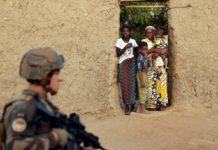
ALIOUNE SALL: There are four scenarios that are very plausible and that cannot be dismissed when thinking about the future of Africa. The first scenario is one in which, basically, there would be no development as such. In any case, no sustainable development. Such a scenario is one that can be called trendy, because it is a continuation of the trends observed over the last 60 years of independence. None of our countries, not even Nigeria or South Africa, has been structurally transformed to the point of deserving the name of emerging country if we are strict in our definition. But there are no catastrophes that were predicted in the 1960s, when everyone was shouting that Africa was in a bad way, that the continent was going to disintegrate. This is not the case; it has not disintegrated, it exists, it functions with these contradictions, it has not developed as it should have, but thanks to food aid when harvests are in deficit, thanks to budgetary aid when civil servants have to be paid, thanks to military aid, etc., the continent is only functioning at a quarter. This is a scenario whose continuation is plausible even if it will be difficult. A second scenario that is quite plausible is, on the contrary, an entropy scenario. If, for one reason or another, budgetary aid were to dry up, if food aid were to become scarce, if military aid were to become difficult, it is certain that a certain number of States that are said today to have failed or to be weak would not be able to hold out for very long. And we could see the development of state wastelands within countries, areas deserted by the state. An extension of these zones could transform certain regions into lawless areas, and in this respect the Sahel has been mentioned as a possible theater of a regression of anthropic peak or the State would collapse, and some researchers have given this scenario the name « Sahelistan », in reference to Afghanistan. A « Sahelistan » whose epicenter would be Mali, which in this scenario would be reminiscent of present-day Somalia. It is a scenario with a certain plausibility and therefore it must be kept in mind.
ENDA TV: And the last two scenarios?
ALIOUNE SALL: The third scenario, which is not impossible even if it is difficult, is a scenario in which some African countries would succeed in their emergence process. Emergence is in everyone’s mouth and must be expressed in French. Today, everyone claims to be emerging, everyone wants to emerge. It is not impossible if we measure emergence by a certain type of integration to the world market. It is not impossible for some countries to do what has been done in Asia, Latin America, etc. An increase in productivity, the predominance of an economic type of rationality over relational logics, etc. This is not impossible. It will not be the case for all African countries, but some may be. It is the case of a country like Nigeria if it were better governed, like South Africa if the disparities were not as great as they are today, or a country like Kenya, etc. These are potentially emerging countries. These are potentially emerging countries. The fourth scenario does not exist anywhere in the world. Neither in Africa nor in Latin America, neither in Asia nor in Europe. It would be that of a radical transformation of economies and societies to lay the foundations for true sustainable development and inclusive growth. In other words, it would be the triumph of a model that reconciles growth and justice, environmental considerations and the concern to satisfy the needs of the greatest number of people through sustained growth. Such a model does not exist anywhere. But just because it does not exist does not mean that it is not possible or even plausible. So I would say that there are four scenarios that are plausible today, but their degree of plausibility is different from one country to another, from one region to another. Their realization may be difficult but not impossible.
ENDA TV: Finally, in order to be fruitful, foresight in Africa should be based on systems that dare to break with the Bretton Woods institutions and promote a more endogenous development?
ALIOUNE SALL: I believe that the Bretton Woods institutions are faithful to their vocation, which is to be the guardians of the global capitalist system. So their vision of the future and their approach to managing development are in line with their mission. These institutions ensure that the markets work to the benefit of the oligarchies that dominate these markets. All their proposals or their view of the world are made through this prism. Through this idea that the market must guide the world and that the market logic is the only one that is valid. It is clear that this way of seeing things can only lead to the disasters we know today. That is to say a destruction of the environment, a weakening of the social fabric because of the crumbling of solidarities and a threat to the survival of the planet because there is an overconsumption of environmental resources. When we are concerned about sustainability, we should certainly not refer to this logic. We must start from another logic which consists in saying that we only have one planet and we must make sure that it is exploited in the best possible way, in order to satisfy the needs of the greatest number of people and in order not to compromise the future of the generations from whom we are borrowing this capital of which we are not really the owner. It is therefore a total reversal of perspectives that we must proceed with. Perhaps this is what you call a more endogenous vision of development. If that is what you mean, then yes, I agree with you. We must reverse the perspectives, we must start from the needs of the basic communities, the needs of the groups, of the communities and not the needs of the market.
ENDA TV: Africa, the world, is facing the Covid. How do you see its future?
ALIOUNE SALL: I think Covid has taken everyone by surprise. We have not finished analyzing what Covid is, but we can say that it is probably the first global crisis in the sense that it has not only affected all regions of the world. It is also unprecedented in the consequences it has had in various fields. It is not only a crisis that has affected health systems and put their capacity to the test, it is a crisis that has affected the governance of societies. We have seen restrictions on freedoms made under the guise of the need to curb the health crisis. Economies have been brought to a halt and we are witnessing phenomenal drops in GDP throughout the continent. There are even consequences on the cultural level, since by dint of order and counter-order, the so-called experts and scholars have created disorder and sown doubt in people’s minds. Today we confine tomorrow we do not confine, today the wearing of a mask is compulsory tomorrow it is not. Today quarantine is compulsory, tomorrow it will be found unnecessary. There have been assertions as peremptory in their statement as unreliable in terms of scientific basis. And this has been a source of cultural anxiety and people are wondering if they should believe in science anymore because they have heard everything and its opposite. So Covid, in my opinion, falls into the category of what Jacques Attali calls « structuring fears ». There are moments in the life of societies when such phenomena occur and when they do, the way we look at ourselves, our past and our future changes. The future will not be what it used to be because in the meantime Covid has shown a certain number of weaknesses, which has shown the inanity of a certain number of projects. So I believe that this is an important moment in history. There will be a before and after Covid.
ENDA TV: Finally, in order to be fruitful, foresight in Africa should be based on systems that dare to break with the Bretton Woods institutions and promote a more endogenous development?
ENDA TV: In Africa, we feel that things are moving in a positive direction…
ALIOUNE SALL: Yes, I also observe that Covid was an opportunity for Africa to experience in situ, practically, the fact that there is no historical fatality. At the beginning of the pandemic, everyone thought that Africa would be the ideal victim of this pandemic. Everyone, starting with the Secretary General of the United Nations, predicted millions of deaths. The Director General of the WHO, who is African, also called for Africa to wake up, pointing out the risk of a very high lethality associated with Covid. But this has not happened. Today, Africa is 35,000 dead. This is the figure for Italy, which alone has more deaths. The macabre hecatomb that could have been the mother lode for some international organizations did not happen. This proves once again that the so-called experts are not always the best people to give the right information. But what is even more interesting to note is that Africa does not owe its salvation to external forces. It owes it to its own forces. No one came to save the Africans. They saved themselves. So is it their climate? Their discomfort? Is it something else? The fact remains that no so-called donor country can claim or take credit for the African situation. I therefore believe that this should be a source of encouragement for Africans to dare to take charge of their own situation, since the others have no solutions. Neither for themselves nor for Africa and that African solutions, voluntary or not, seem to work. I believe that the time for doubts is over. The skepticism or Afro-skepticism that led some to wonder if Africans will save Africa is no longer justified. The answer is clear today: it is up to Africans to save themselves. And I would add that Africans have the means to do so. If we emerge from this crisis with this mindset, Covid will have been useful. But we must also learn all the lessons from Covid and in particular remedy the weaknesses that Covid has highlighted. There are many, starting with the weakness of our health systems and beyond our health systems, our social protection systems.
ENDA TV: Can we imagine, in the chaos that is emerging, the South becoming the center of the world again?
ALIOUNE SALL: I do not wish it. Because deep down, becoming a master and being locked in the dialectic of master and slave does not seem to me to be something particularly exciting. I want a world without masters, without slaves. So I don’t want to be the master just as I don’t want to be the slave. A reversal of roles would not satisfy me. I think, on the other hand, that rebalancing relations between the North and the South within the framework of a less unequal division of labor, in a true partnership between communities, between nations, I believe that this is entirely desirable. Because, once again, we only have one planet and we must find the means to live together, to organize a life together on one planet. Because if we destroy it, we are all set to fail.
(Enda Télévision HD) – Interview by Tidiane Kassé