





















TTRIBUNE. To ward off the spectre of a food crisis, Africa must create endogenous and virtuous value chains around its agriculture. By Joseph Owona Kono*
Although Covid-19 does not discriminate, the record is not the same for all, especially when it comes to the resilience of food systems. Movement restrictions put in place to contain the spread of the virus, disruptions in global supply chains, and the shutdown of many agribusiness production sites are contributing to reduced food availability. The continent’s dependence on food imports, which the AfDB predicts will increase to USD 110 billion by 2025, is even more threatening because once the depreciation of national currencies is taken into account, the automatic increase in prices will effectively exclude the lowest-income populations.
Food insecurity, a real threat for Africa
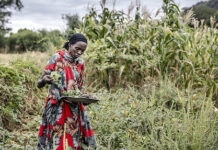
In 2019, a joint report by the WFP and the FAO warned that 73 million Africans were already suffering from acute food insecurity. Since then, two successive locust invasions have ravaged crops in the east of the continent and the Covid-19 epidemic is spreading into the heartland. For the 65% of African workers in the agricultural sector, the pain is twofold: the supply chains for inputs and seeds are disrupted and access to markets is made more complicated.
In 2003 in Maputo, African leaders, aware of the important leverage effect of the development of the agricultural sector on food self-sufficiency and access to employment on the continent, launched the Comprehensive Africa Agriculture Development Program (CAADP). With an ambitious objective of allocating a minimum of 10% of public spending to the agricultural sector, this pan-African framework was supposed to achieve 6% annual growth in agricultural GDP. More than fifteen years later, countries such as Mali, Rwanda and Togo, which have adopted the PPDA objectives, are seeing convincing results, with a drop in the malnutrition rate of between 2.4 and 5.7% per year. However, on a continental scale, the agricultural balance remains in deficit and the nutritional situation is struggling to improve.
Building on the strong agricultural potential
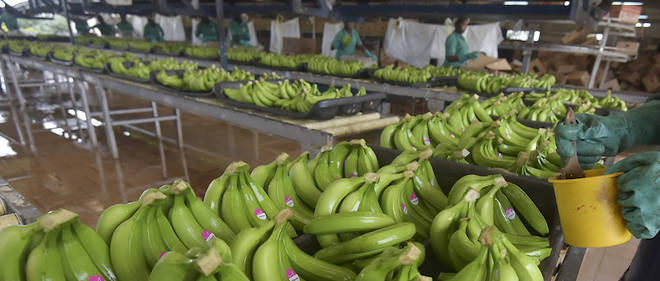
And yet, natural agricultural resources, although unevenly distributed across the continent, could enable Africa to achieve food self-sufficiency and become a true agricultural power. In recent years, agricultural policies have focused on implementing reforms that facilitate foreign investment, but they must now refocus on strengthening regional and national markets. In these times of crisis, when the availability of basic foodstuffs on international markets is no longer guaranteed, the importance of a diversified agricultural model that takes advantage of cash crops but also meets the urgent needs of the population for supplies is reinforced. Today, the income from these cash crops is vital for many national economies, as it is a source of significant foreign exchange earnings and thus an improvement in the balance of trade in a period of budgetary pressure. While some sectors, such as bananas, are resilient despite disruptions in international logistics, other fruit sectors, due to a lack of regional processing capacity and trade corridors that promote intra-continental exports, still cannot find outlets for their produce on a continent that is a net importer of foodstuffs.

It is time to change this situation
Today, it is necessary for decision-makers to take advantage of this crisis to make a transition to an agricultural and food model that meets the continent’s demographic challenges. Indeed, according to the World Bank, the African continent will be home to more than 2 billion people in 2050. To achieve this transformation of our agricultural model, three axes are a priority.
The first is generational transmission. While the African continent has a young population, the workforce in the agricultural sector is aging. Africa is a historically agricultural continent and its population has developed valuable know-how. This experience must now be combined with the dynamism and innovation of the younger generation, which is currently not sufficiently interested in the land-based professions, which seem to them to be precarious and outdated. However, these young people can contribute to the modernization of the sector, as shown by the emergence of the African agritech.
In addition, the intensification of the development of sustainable value chains through the strengthening of regional integration is essential. This strategic reorientation must have one objective: to favor local and regional production without being at the expense of the African consumer. With the FTAA, Africa has the opportunity to allow African agribusiness to grow and become more competitive in its domestic markets before being exposed to competition in international markets. Combined with the development of infrastructure and the establishment of the FTAA, the successful structuring of certain export sectors that meet international standards could serve as a model for other agricultural sectors to strengthen African economic integration.
Finally, in order to face up to this heightened international competition, we must encourage the grouping of production poles in the form of a federation, like Afruibana for bananas or other fruits, but also agreements between producing countries, as Ghana and Côte d’Ivoire are now doing for cocoa. By speaking with one voice, African producers will better defend their interests against their American, Asian or European competitors.
*President of Afruibana, Executive Secretary of Assobacam, Member of the National Assembly of Cameroon.